
Blog
What We Mean When We Say a Home is Well-Ventilated
04 February 2026
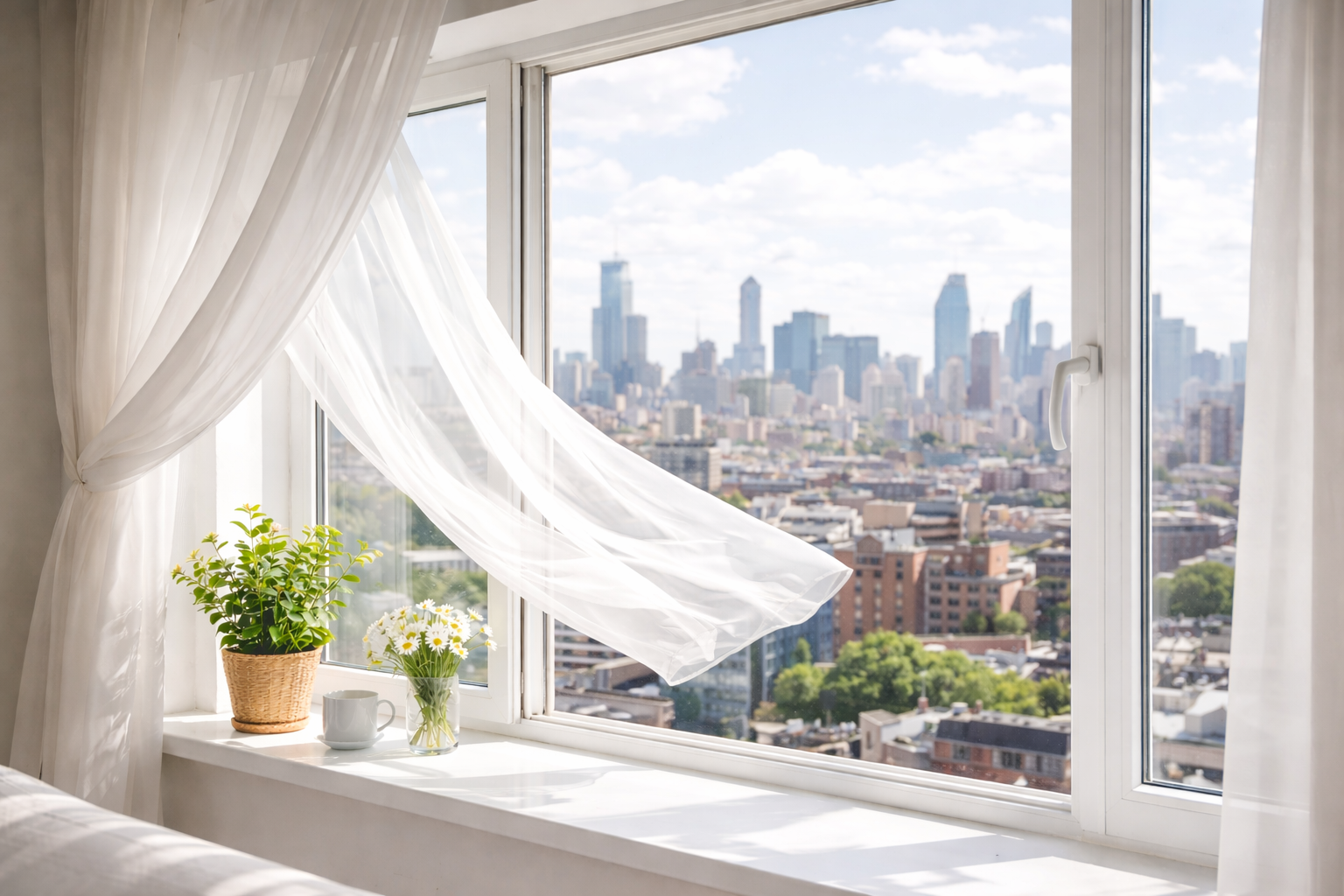
People don’t usually mean it literally when they say a home is “breathable.” They’re talking about how it feels to live there, like how the air moves, how the light settles, and how the space changes with the time of day.
A breathable home is one where mornings feel fresh, afternoons don’t feel heavy, and evenings invite you to slow down. It is a quality sensed instinctively, often before it is understood.
Air That Moves, Not Stagnates
In a lot of Indian cities, good ventilation has more to do with comfort than temperature. Even in summer, homes that let air move freely tend to feel lighter.
This movement doesn’t come from large openings alone. It comes from alignment—how windows are placed across rooms, how corridors allow cross-ventilation, and how built forms avoid blocking the breeze. When air has a clear path to follow, it keeps interiors feeling alive rather than enclosed.
Well-ventilated corridors, shared passages that receive daylight, and layouts that allow air to pass through more than one space all contribute quietly to this sense of ease. These elements are rarely noticed on their own, but together, they make a home feel healthier and calmer.
Light That Changes through the Day
Homes that are well-ventilated are also responsive to light. Spaces that get sunlight from different directions feel alive instead of dead. In the morning, light softens bedrooms; in the middle of the day, it brightens living areas; and in the evening, it gently fades away without making rooms feel dark or heavy.
Homes that don’t have deep, dark corners feel more open. Even passages inside a building look better when they are connected to views of the outside or shared green spaces. Light becomes a wayfinding element—it helps you find your way, makes you feel better, and makes the space feel bigger. When used carefully, artificial light can help this rhythm instead of overpowering it.
Being Open without Being Exposed
There is a fine line between being open and keeping things private. Homes that feel breathable are able to do both.
When homes are planned right, people feel comfortable keeping their windows and doors open. Curtains stay open. Balconies get used. And the view outside stays clear and pleasant.
You don’t get this kind of privacy by closing off spaces; instead, you do it by planning how buildings, the green and open spaces, and orientation will work together. It lets homes stay visually connected to their surroundings without feeling like they’re being watched.
When privacy issues are worked out during the planning stage, comfort comes easily.
What Green Does for Breathing Spaces
Plants are an important part of how homes breathe, even if they don’t seem like it. The air is cooler because of the trees. Planting makes light softer. Landscaped areas in crowded cities give the eye a break.
Houses that look out over green spaces, like gardens, courtyards, or tree canopies, feel more open and peaceful. Even shared outdoor spaces that are high up and away from traffic and noise make the inside of a building better.
These green links don’t have to be very big. People often feel them more than they see them, like when the air gets cooler, the noise goes down, and the city feels less intense.
Going from the City to Home
Breathing doesn’t just happen inside a house. It starts much sooner.
How a space is experienced depends a lot on how it goes from street to home. When this change happens slowly, like going through shaded paths, landscaped steps, or open courtyards, the mind slows down before the body goes inside.
These times of rest help people forget about the day’s stress. The change from work mode to home mode has already started by the time they get to their door.
This isn’t about being grand. It’s about letting people get there on time.
Places That Make You Stop
When homes are designed to let air flow, the surroundings usually feel open as well. Benches under trees, quiet corners, and open decks are all examples of shared spaces that make people want to stay longer. These spaces encourage residents to go outside, breathe, and connect. They change habits, routines, and relationships over time.
When everyone can use these spaces, they start to feel like an extension of the home instead of a separate feature.
A Way of Thinking That Is Coming Together
As urban living evolves, there is growing awareness that comfort is not created by mechanical solutions alone. It is shaped by planning—by how air, light, movement, and landscape are allowed to coexist.
This approach is beginning to influence newer residential developments in cities like Thane, including Rohan’s latest project. Without drawing attention to itself, the focus remains on creating environments where homes feel open, calm, and easy to live in—places that breathe naturally alongside their residents.
Because when a home is well-ventilated, so do the people who live in it.
TOP Blog
Why Spaciousness Beyond Square Feet Matters
04 February 2026
Space is usually measured in square feet. But experienced in far quieter ways. Most people have walked into homes that inst...
Read More
What We Mean When We Say a Home is Well-Ventilated
04 February 2026
People don't usually mean it literally when they say a home is "breathable." They're talking about how it feels to live there,...
Read More
Why Thane Works the Way It Does: Location Highlights
04 February 2026
Some places slowly make life easier. Not because they try to. But because they’ve grown that way. Thane is one of those cit...
Read More
Rohan Builders Wins Best CSR Initiative at National CREDAI Awards 2025

20 January 2026
We are excited to share a milestone that truly means a lot to us. Rohan Builders has been awarded the 1st Prize for Best CSR I...
Read More
Viman Nagar: The Gateway of Growth in Pune

18 June 2025
Viman Nagar used to be a calm neighbourhood that was renowned once only for being close to the Pune Airport. However, over the...
Read More
 +91
+91 +672
+672 +82
+82